Coffee Table Book Design for Award-Winning Brands

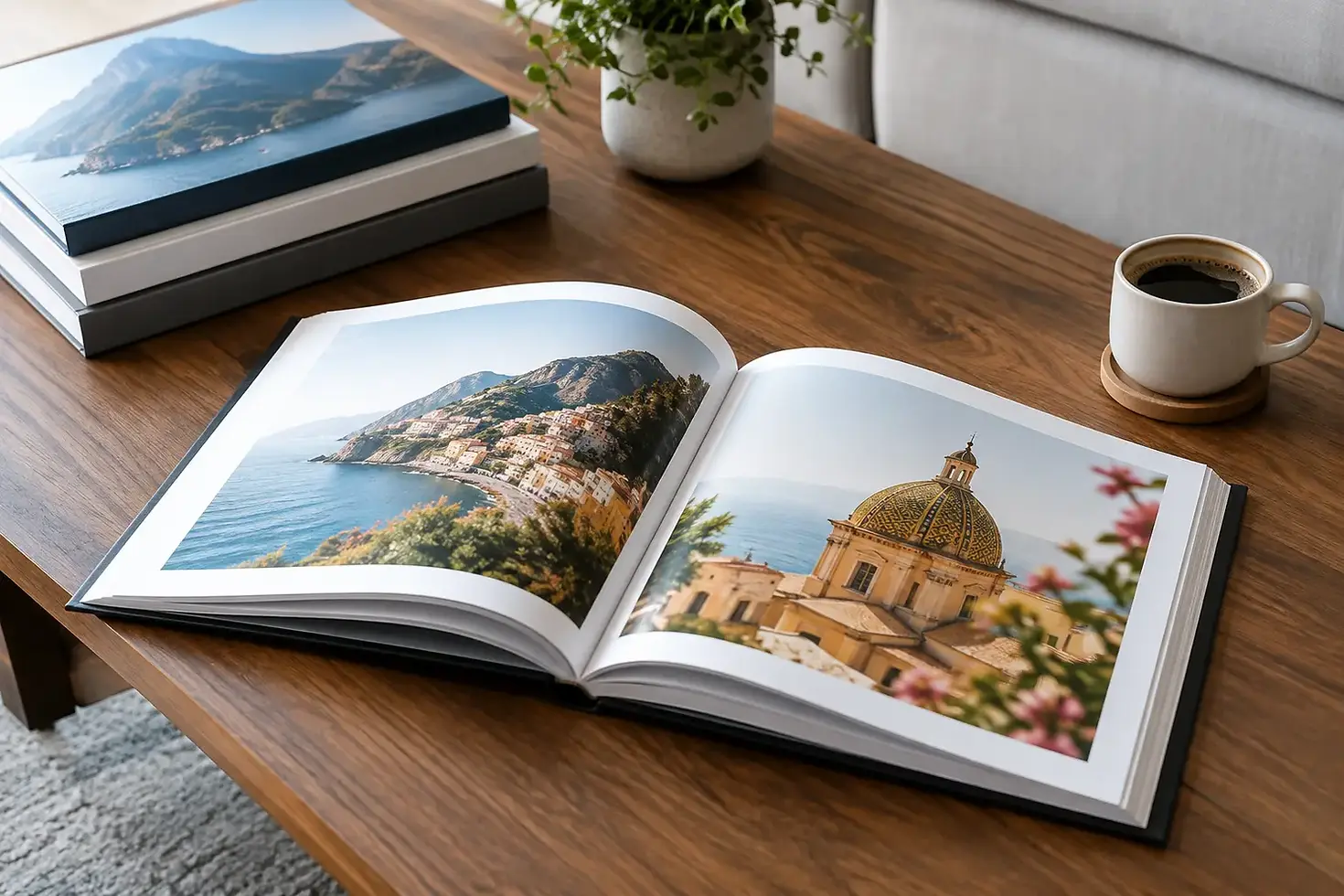
A well-executed development, hotel or architectural project should not disappear into a presentation folder once the photography is complete. Coffee table book design gives significant work the physical presence it deserves: a considered record of ambition, delivery and distinction that can influence clients, investors, partners and award judges long after a meeting ends.
For reputation-led businesses, this is not simply a publishing exercise. It is a controlled brand asset. The difference between an impressive book and an expensive brochure lies in how clearly it translates business achievement into a story people want to hold, read and retain.
Why coffee table book design matters to premium brands
In property, architecture and hospitality, the product is often experienced through evidence before it is experienced in person. A prospective buyer may first encounter a project through imagery. An investor may need reassurance that a developer can execute at scale. A judge may be assessing whether the quality claimed in an award submission is visible in the detail.
A coffee table book creates a more lasting interaction than a digital brochure or slide deck. Its format signals permanence and confidence, but only when the editorial and production standards support that signal. Heavy stock, strong photography and a refined cover will not rescue vague messaging, inconsistent visual direction or a book with no clear audience.
At its best, the book becomes a commercial and reputational tool. It can support sales suites, investor meetings, hotel launches, international exhibitions, stakeholder engagement and post-win publicity. It also creates a credible archive of the organisation's achievements, which becomes increasingly valuable as a portfolio of completed projects grows.
Start with the strategic purpose, not the cover
The first decision is not whether the cover should be linen-bound, embossed or foil-blocked. It is what the publication must accomplish. A commemorative book marking a landmark development will require a different narrative from a corporate portfolio designed to support regional expansion or award entries.
Senior teams should agree the primary audience before the creative process begins. Is the book intended for high-net-worth purchasers, hotel guests, institutional investors, planning stakeholders, media, awards organisers or internal leadership? Trying to speak equally to all of them often produces a polished but unfocused publication.
The desired outcome should be equally clear. A book may need to demonstrate design leadership, establish a founder's vision, show delivery capability, protect a heritage story or present environmental performance with authority. This purpose determines the balance of photography, editorial copy, technical information and project data.
For award-focused brands, the strongest approach usually centres on proof. Claims of luxury, innovation or sustainability need visible and verifiable support: design decisions, material choices, construction challenges, measurable outcomes, expert voices and the human thinking behind the finished result.
Build a narrative that earns attention
Readers rarely begin at page one and progress neatly to the final spread. Coffee table books are browsed. That makes pacing essential. Each spread must stand on its own while also contributing to a coherent wider story.
A useful narrative often moves from vision to place, then from process to outcome. It may begin with the location and the strategic opportunity, introduce the people and partners behind the work, reveal the design language and conclude with the experience or impact created. The exact sequence depends on the project, but the reader should never have to work out why a page is there.
Avoid turning the book into a catalogue of superlatives. Words such as ‘iconic’, ‘world-class’ and ‘unprecedented’ are weak unless the evidence makes them unavoidable. A precise explanation of a difficult site condition, a restored historic feature or a measurable reduction in operational energy use carries more weight than pages of promotional language.
The visual system must reflect the standard being claimed
Coffee table book design is fundamentally an exercise in hierarchy. The reader needs to know what to notice first, what to understand next and where to pause. White space, image scale, typography, captions and sequencing do that work together.
Photography should be commissioned or selected with a clear brief. Wide architectural shots establish scale, but they cannot carry an entire publication. Detail photography communicates workmanship; contextual images show connection to place; portraits can make a corporate story more credible. Hospitality books should show atmosphere and service as well as interiors. Property books should show how people move through and use the spaces, not only empty rooms at ideal light.
Consistency matters, though it should not become monotony. A restrained grid and defined typographic palette create discipline, while occasional full-bleed imagery or gatefolds can provide genuine moments of impact. Special production features are worthwhile only where they amplify the story. A dramatic fold-out site plan may clarify a masterplan. Foil used merely because it appears premium can quickly date the work.
Material choices should also be made with the distribution plan in mind. A large-format hardback makes a strong boardroom statement but is costly to ship across markets. A smaller, exceptionally produced format may be more practical for sales teams, VIP gifting and exhibition use. Sustainability credentials should be considered carefully, including paper sourcing, print runs, local production and the likelihood that copies will have a long useful life.
Editorial discipline is what separates a book from a brochure
The most common weakness in corporate books is too much copy saying too little. Executive messages, project descriptions and partner profiles should be edited for relevance and authority. Every page needs a role.
Use captions to add information that an image cannot convey: orientation, materials, designer intent, performance data or a revealing detail of the construction process. Do not repeat the main body copy in shorter form. Equally, do not allow captions to become an afterthought. They are often the most-read text in the book.
Facts require the same scrutiny as an award submission. Check dates, project areas, certification claims, consultant names, completion status and statistics. If the book cites awards, accreditations or environmental results, state them accurately and in a way that can be substantiated. A premium publication should increase trust, never create avoidable questions.
It is also wise to decide what not to include. Every project does not require equal coverage. Selective curation communicates confidence. A business with a large portfolio may be better served by a strong editorial theme and a handful of fully evidenced case studies than by dozens of small, interchangeable project entries.
Design the production process as carefully as the book
The creative outcome is only as reliable as the process behind it. Before design begins, establish a content schedule covering photography, interviews, approvals, technical information, copywriting, rights clearance, translation requirements and print specifications. Late changes are especially expensive once pagination, retouching and print preparation are underway.
A defined approval structure is essential. One senior decision-maker or small steering group should have final authority, otherwise competing preferences can erode the original concept. Brand teams, architects, operators, sales leads and external consultants all have legitimate perspectives, but the publication needs one strategic direction.
Proofing should happen at more than one level. Digital proofs identify layout and copy issues; physical proofs reveal how colour, paper, image density and finishes actually perform. This is particularly important for architectural photography, where dark finishes, subtle materials and natural light can reproduce very differently in print.
For businesses using the book alongside award activity, timing matters. The strongest evidence may emerge during construction, launch or early operation, while key photography and stakeholder access are available. Capturing that material early prevents a rushed, retrospective record later. It can also provide a disciplined source library for award submissions, press materials and future brand communications.
Where a specialist perspective adds value
A book must be beautiful, but beauty alone is not its commercial justification. The strategic question is whether the publication makes achievement easier to understand, harder to overlook and more credible to repeat in other high-value conversations.
This is where award thinking can sharpen coffee table book design. Judges respond to clarity, evidence, distinctiveness and a compelling narrative. So do investors, purchasers and industry partners. The same disciplined approach that strengthens a competitive award entry can help identify the project details, performance markers and human stories that deserve space on the page.
International Awards Group approaches recognition as a business asset rather than a trophy exercise. That perspective is equally relevant to a flagship publication: every creative decision should reinforce the market position the organisation is seeking to own.
A coffee table book does not need to explain everything your business has done. It needs to make the right audience feel the quality of what you have achieved, then give them enough evidence to trust that feeling. When the story, design and production are aligned, the book remains on the table for a reason.



Comments